





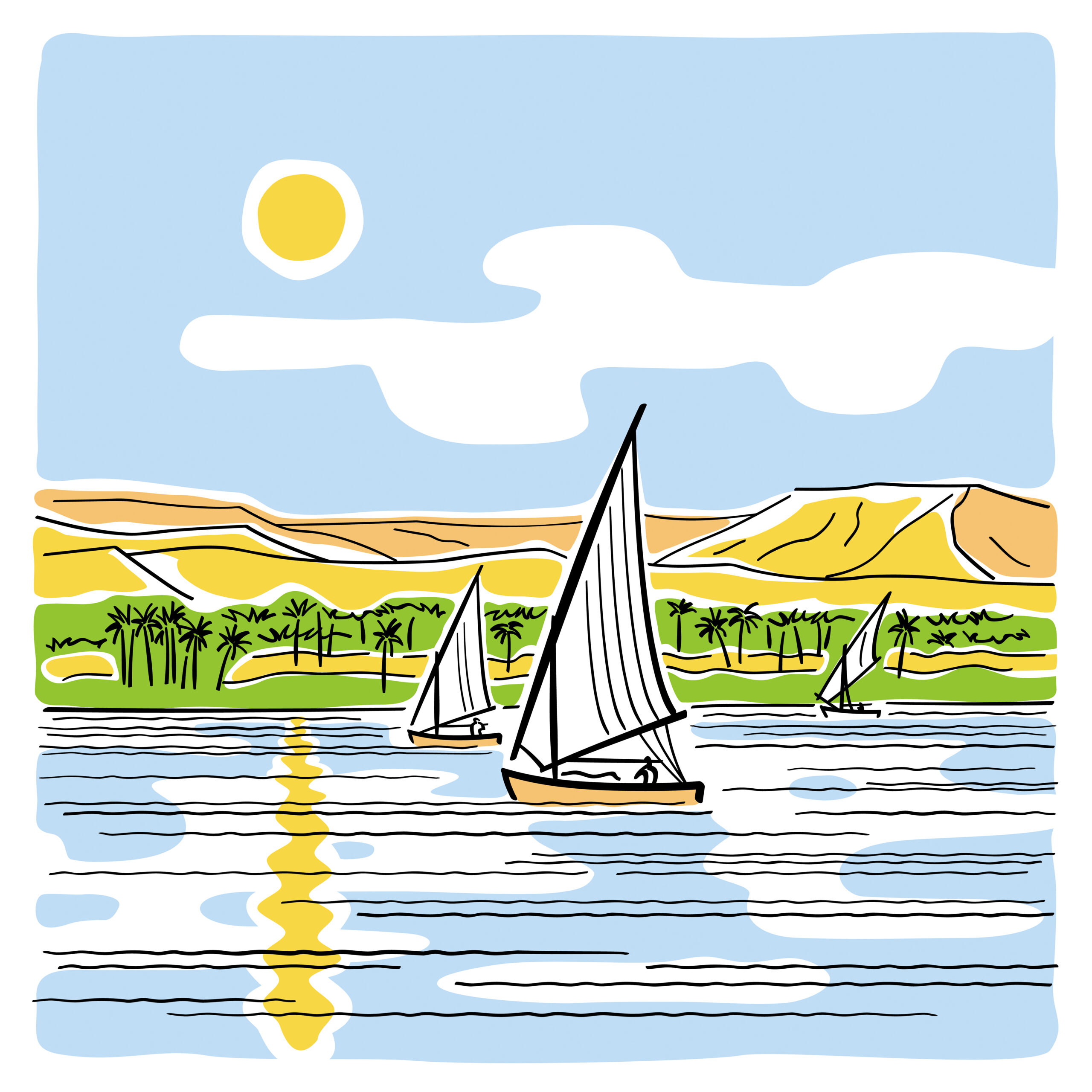


FAMILIENURLAUB
EIN FAMILIENURLAUB IN ÄGYPTEN WIRD NICHT KOMPLETT SEIN, WENN SIE DIESE AUFREGENDEN ORTE NICHT BESUCHEN.
Lass dich inspirieren

A village is a clustered human settlement or community, larger than a hamlet but smaller than a town, with a population ranging from a few hundred to a few thousand. Though often located in rural areas, the term urban village is also applied to certain urban neighbourhoods. Villages are normally permanent, with fixed dwellings; however, transient villages can occur. Further, the dwellings of a village are fairly close to one another, not scattered broadly over the landscape, as a dispersed settlement. In the past, villages were a usual form of community for societies that practise subsistence agriculture, and also for some non-agricultural societies. In Great Britain, a hamlet earned the right to be called a village when it built a church. In many cultures, towns and cities were few, with only a small proportion of the population living in them. The Industrial Revolution attracted people in larger numbers to work in mills and factories; the concentration of people caused many villages to grow into towns and cities. This also enabled specialization of labor and crafts, and development of many trades. The trend of urbanization continues, though not always in connection with industrialization. Villages have been eclipsed in importance as units of human society and settlement. Although many patterns of village life have existed, the typical village was small, consisting of perhaps 5 to 30 families. Homes were situated together for sociability and defence, and land surrounding the living quarters was farmed. Traditional fishing villages were based on artisan fishing and located adjacent to fishing grounds.
