







FAMILIENURLAUB
EIN FAMILIENURLAUB IN ÄGYPTEN WIRD NICHT KOMPLETT SEIN, WENN SIE DIESE AUFREGENDEN ORTE NICHT BESUCHEN.
Lass dich inspirieren

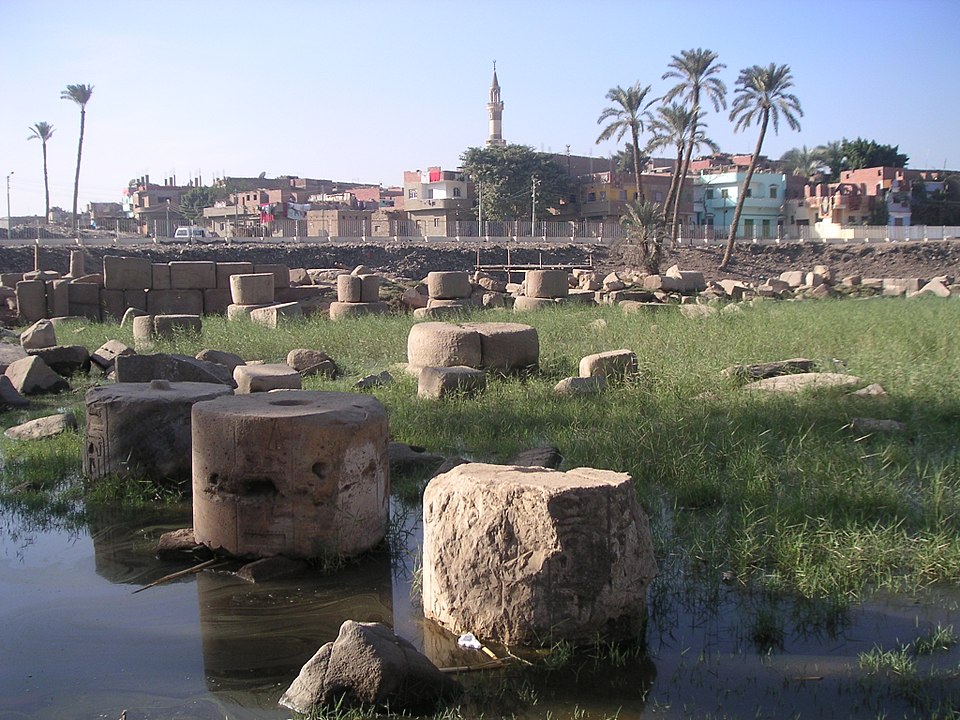
Memphis ( ; ) was the ancient capital of Aneb-Hetch, the first nome of Lower Egypt. Its ruins are located near the town of Mit Rahina, 20 km (12 mi) south of Cairo. According to legend related by Manetho, the city was founded by the pharaoh Menes. Capital of Egypt during the Old Kingdom, it remained an important city throughout ancient Mediterranean history. It occupied a strategic position at the mouth of the Nile delta, and was home to feverish activity. Its principal port, Peru-nefer, harboured a high density of workshops, factories, and warehouses that distributed food and merchandise throughout the ancient kingdom. During its golden age, Memphis thrived as a regional centre for commerce, trade, and religion. Memphis was believed to be under the protection of the god Ptah, the patron of craftsmen. Its great temple, Hut-ka-Ptah (meaning “Enclosure of the ka of Ptah”), was one of the most prominent structures in the city. The name of this temple, rendered in Greek as Aί γυ πτoς (Ai-gy-ptos) by the historian Manetho, is believed to be the etymological origin of the modern English name Egypt. The history of Memphis is closely linked to that of the country itself. Its eventual downfall is believed to be due to the loss of its economic significance in late antiquity, following the rise of coastal Alexandria. Its religious significance also diminished after the abandonment of the ancient religion following the Edict of Thessalonica. The ruins of the former capital today offer fragmented evidence of its past. They have been preserved, along with the pyramid complex at Giza, as a World Heritage Site since 1979. The site is open to the public as an open-air museum.
