




FAMILIENURLAUB
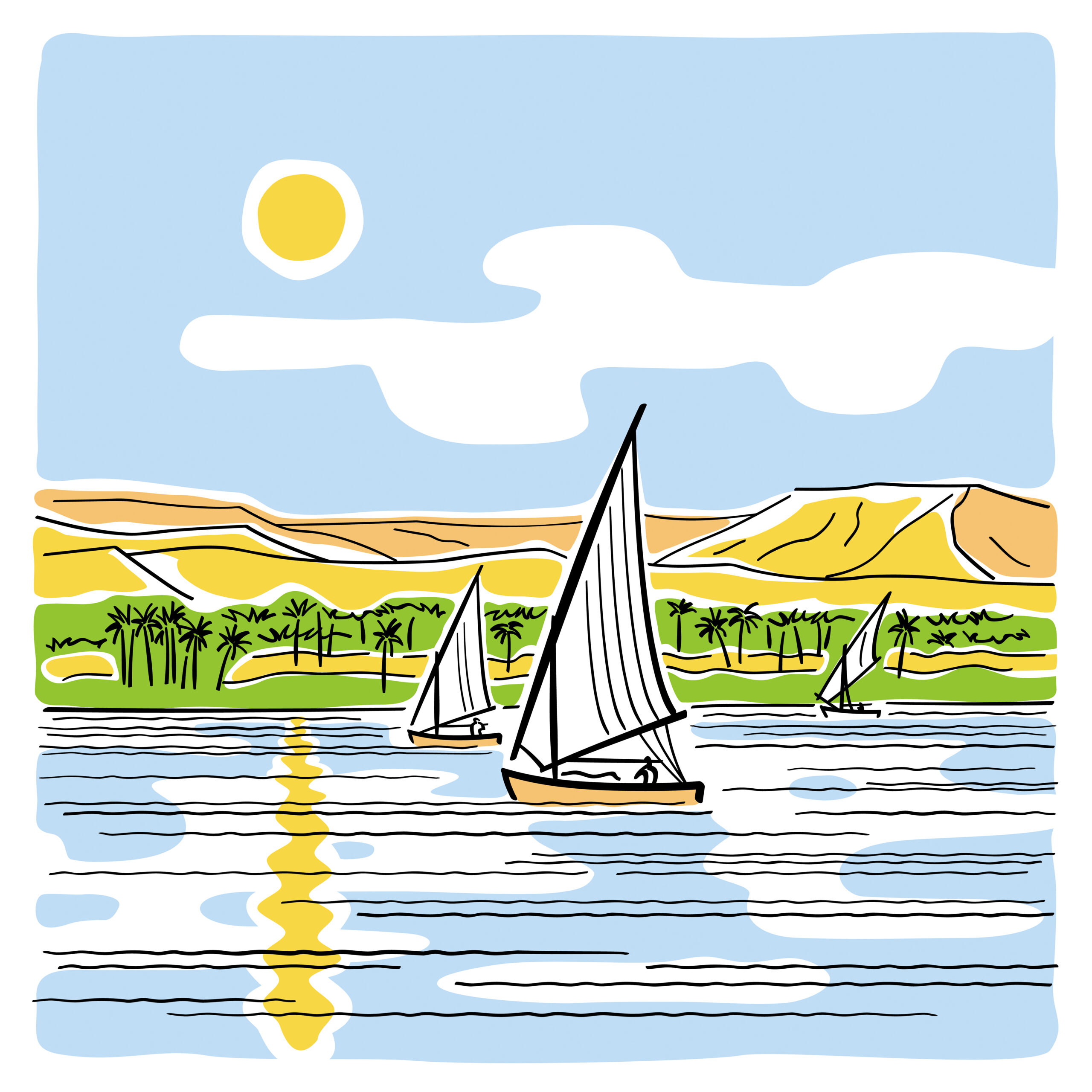
EIN FAMILIENURLAUB IN ÄGYPTEN WIRD NICHT KOMPLETT SEIN, WENN SIE DIESE AUFREGENDEN ORTE NICHT BESUCHEN.
Lass dich inspirieren

The Sun is the star at the center of the Solar System. It is by far the most important source of energy for life on Earth. The Sun is a nearly perfect spherical ball of hot plasma, with internal convective motion that generates a magnetic field via a dynamo process. The diameter of the Sun is about 109 times that of Earth, and it has a mass about 330,000 times that of Earth, accounting for about 99.86% of the total mass of the Solar System. Chemically, about three quarters of the Sun’s mass consists of hydrogen, whereas the rest is mostly helium, and much smaller quantities of heavier elements, including oxygen, carbon, neon and iron. The Sun is a G-type main-sequence star (G2V) based on spectral class and it is informally designated as a yellow dwarf. It formed approximately 4.567 billionAll numbers in this article are short scale. One billion is 109, or 1,000,000,000. years ago from the gravitational collapse of a region within a large molecular cloud. Most of the matter gathered in the center, whereas the rest flattened into an orbiting disk that became the Solar System. The central mass became increasingly hot and dense, eventually initiating thermonuclear fusion in its core. It is thought that almost all stars form by this process. The Sun is roughly middle age and has not changed dramatically for four billion years, and will remain fairly stable for four billion more. However, after hydrogen fusion in its core has stopped, the Sun will undergo severe changes and become a red giant. It is calculated that the Sun will become sufficiently large to engulf the current orbits of Mercury, Venus, and possibly Earth. The enormous effect of the Sun on the Earth has been recognized since prehistoric times, and the Sun has been regarded by some cultures as a deity. Earth’s movement around the Sun is the basis of the solar calendar, which is the predominant calendar in use today.
